Most campervan hire problems in Western Australia aren’t bad luck. They’re avoidable, and they usually trace back to the same handful of mistakes made before the trip even starts. Get these right and you spend the trip driving, not sorting out admin.
Here’s the short version, then the detail on each:
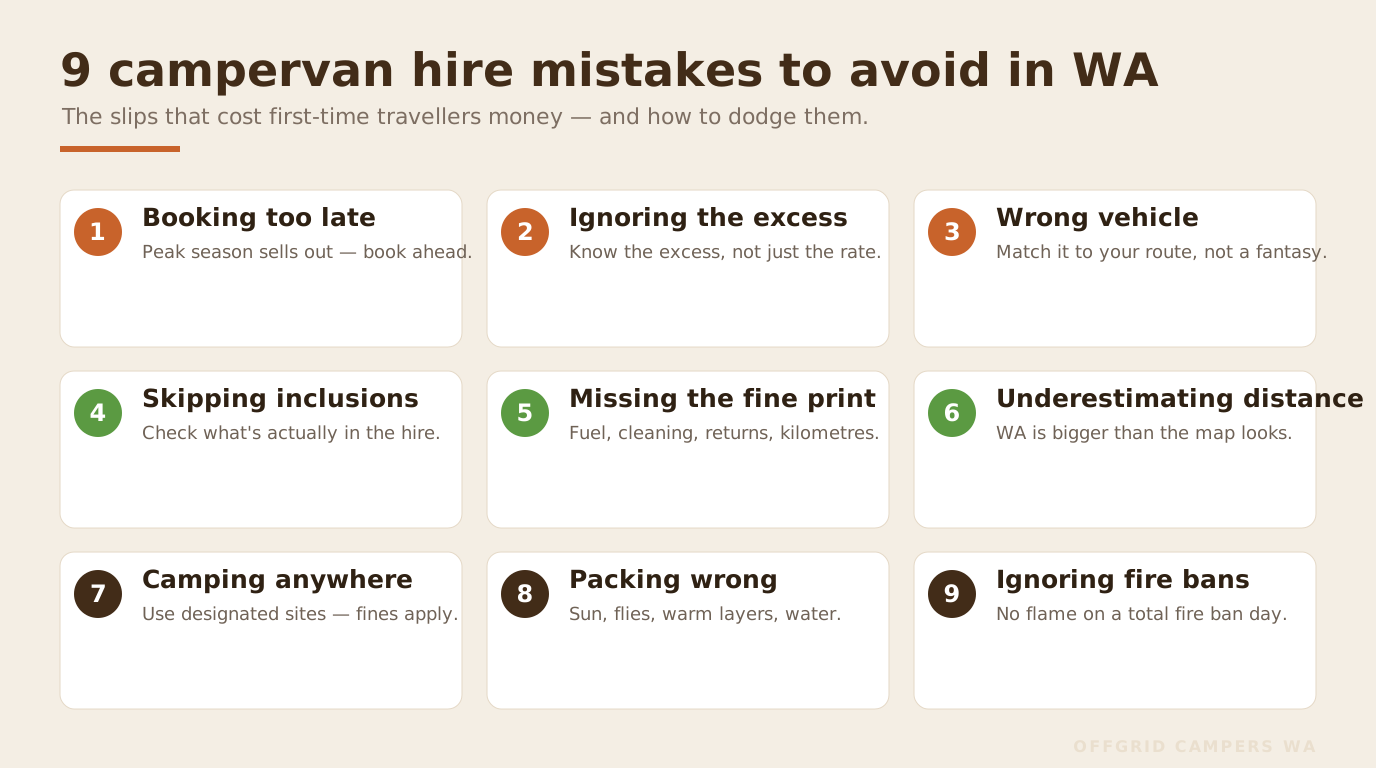
- Booking too late for school holidays and summer.
- Not understanding the insurance excess and what isn’t covered.
- Choosing the wrong vehicle: a 4WD when a van would do, or a van that’s too small.
- Not checking what’s actually included in the hire.
- Skipping the fine print on fuel, cleaning, returns and kilometre limits.
- Underestimating WA’s distances and the gaps between fuel and supplies.
- Assuming you can camp anywhere.
- Packing wrong: too much, or missing the things WA actually demands.
- Ignoring weather warnings and fire bans.
1. Booking too late for peak season
Demand for campervans in Perth spikes over the December–January summer, school holidays and long weekends. Book close to those dates and you’ll pay more and choose from whatever’s left.
Book a few months ahead for peak periods, or travel in spring or autumn instead. Shoulder season in WA means milder driving weather, quieter campgrounds and better availability, the south-west in particular is at its best in spring.
2. Misunderstanding the insurance excess
First-time renters often assume they’re fully covered, then get a shock when something minor turns into a big bill. The number that matters isn’t the daily rate, it’s the excess (the amount you’re liable for if there’s a claim).
With Offgrid Campers WA, comprehensive insurance and NRMA-style roadside are included in the daily rate, and the excess can be reduced through Camplify’s MyWay cover. We’ve explained exactly how the excess works, and how to bring it down, on the camper excess page, read that before you book so there are no surprises.
Two things travellers get caught by: your credit-card travel insurance often won’t cover a campervan or motorhome (check the fine print before you rely on it), and any separate third-party excess-reduction policy has to be bought before the hire starts, you can’t add it after something goes wrong.
Two things to know whatever you hire: cover does not extend to prohibited roads (sand, beaches, river crossings, heavily corrugated tracks and remote 4WD routes), and damage from driving somewhere you weren’t allowed is on you. If a road isn’t clearly permitted, ask first.
3. Picking the wrong vehicle size or type
The classic mistake is paying for a 4WD you don’t need, or squeezing four people into a van built for two.
Most of WA’s popular routes are sealed, so a 2WD campervan handles them comfortably and uses less fuel. A 4WD camper earns its keep when you want gravel-access confidence into the national parks, or you need the extra beds a rooftop-tent setup gives a family. It is not a licence for sand or remote tracks, our 4WD campers are built for traction and clearance on formed roads, not expedition driving.
If you’re genuinely torn, our campervan vs 4WD camper guide walks through it by route and group size. Match the vehicle to where you’re actually going, not to the trip you imagine.
4. Not checking what’s included
A cheap headline rate can cost more once you add bedding, a camp kitchen, chairs and a table. Inclusions vary a lot between operators, so confirm what comes with the vehicle before you compare prices.
Our campers come set up to travel, 300Ah lithium, 200W solar, an 85L-plus fridge-freezer, an induction kitchen, bedding and camp gear, plus the WA Parks Pass. Knowing what’s provided means you don’t double up by buying or hiring things you already have. How it works lists what’s included.
5. Skipping the fine print: fuel, cleaning, returns and kilometres
This is where surprise charges live. A few things to check on any hire:
- Fuel: most operators want the vehicle back at the fuel level you collected it. Ours run on diesel and come back with a full tank. Photograph the gauge at pickup.
- Cleaning: return it in the condition you got it. Leaving it filthy, or driving red-dust roads, can trigger a cleaning fee.
- Kilometre allowance: hires usually include a daily kilometre allowance, with a per-kilometre charge beyond it. Check the figure on the Camplify listing and factor your route against it, WA distances add up fast.
- Pickup and return: ours is Perth only, with no one-way hires. Plan your route as a loop back to Perth.
6. Underestimating distances and supply stops
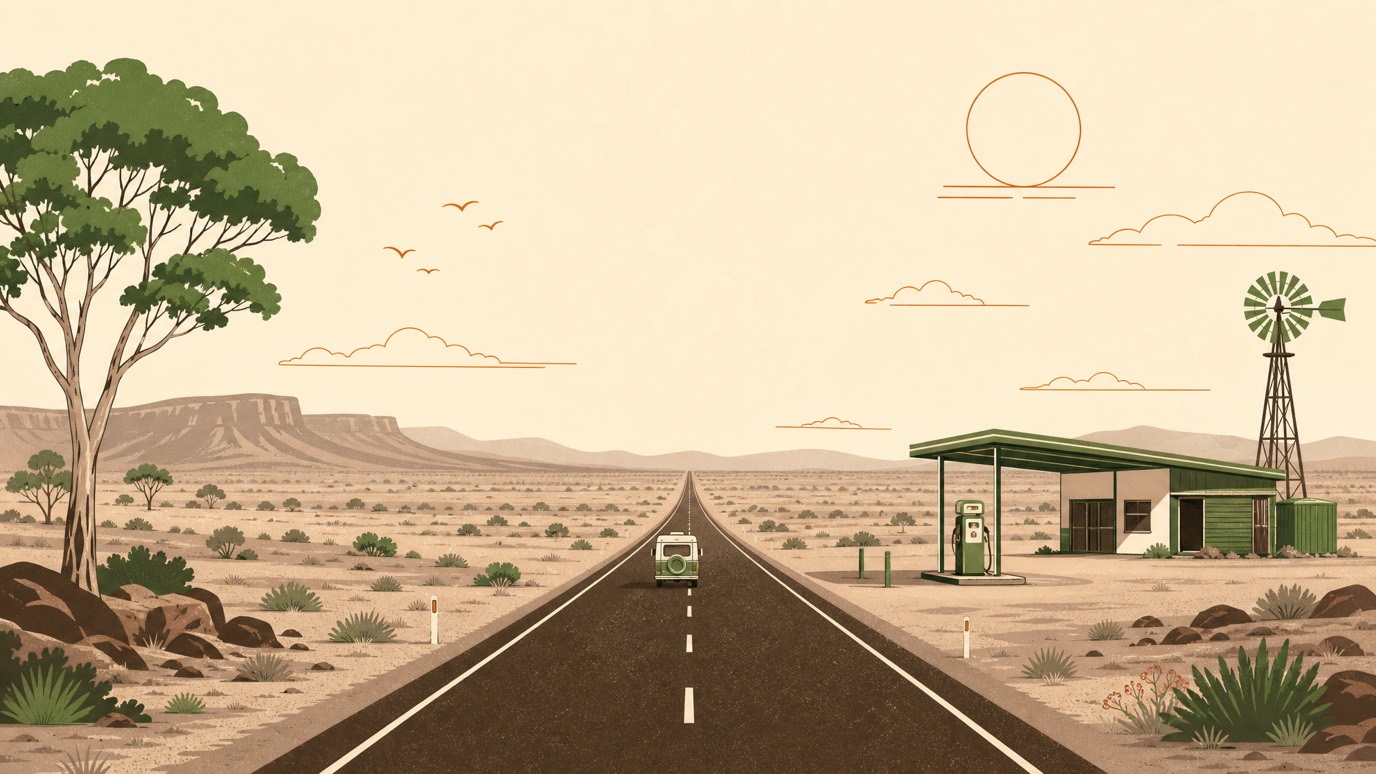
WA is big in a way maps don’t convey, and the distances are the real challenge, not the driving difficulty. Fuel, food and water can be hundreds of kilometres apart once you leave the main centres. Help is far away too: a breakdown in a remote stretch is a long wait whether you’re in a rental or your own car. That’s not scaremongering, it’s exactly why hire terms (ours included) keep you on roads where you can actually be reached.
Plan fuel stops in advance and top up when you can, not when you’re low. FuelWatch WA shows current prices and station locations across the state. Carry drinking water and fill up before long serviced-free stretches, heading up the Coral Coast, Carnarvon is the last reliable stop before the run to Exmouth. Download offline maps, because coverage drops out once you’re off the highways.
Keep daily drives realistic, somewhere around 300–400km is a comfortable maximum if you actually want to see anything. Our WA road trip guides break the popular routes into sensible daily stages.
7. Assuming you can camp anywhere
You can’t simply pull over and sleep wherever you like. WA enforces its camping rules, and fines apply for overnighting outside designated areas, rangers patrol the popular coastal spots around Margaret River and Esperance.
Use national park and caravan-park campgrounds, or free and low-cost sites listed in apps like WikiCamps. National park campsites can be booked ahead through WA’s Explore Parks site, and they fill quickly over school holidays. Our guide to camping near the beach in WA points to legal spots worth planning around.
8. Packing wrong for WA conditions
WA’s weather swings hard, a warm beach morning can turn into a cold inland night, even in summer. Pack for the range, not the brochure.
The things first-timers most often miss:
- Sun protection. UV is intense year-round, SPF 50+, a broad-brim hat, sunglasses, light long sleeves.
- Insect protection. Flies by day, mosquitoes near water at dawn and dusk. Repellent and a head net earn their place.
- Warm layers. A jumper and beanie for inland nights.
- Drinking water. Carry your own and refill at every reliable stop.
- A decent first aid kit, including a snake bite bandage, plus a torch and sturdy footwear.
Then stop. Campervans have limited space, and overpacking makes daily life harder and the vehicle heavier on fuel. Soft bags pack better than hard cases, and if the camper already includes kitchen and bedding, leave the duplicates at home.
9. Ignoring weather warnings and fire bans
WA is so large that the north and south can be in completely different weather. Cyclone season runs roughly November to April across the north and the Pilbara, and conditions can change fast. Check the Bureau of Meteorology and Emergency WA before and during your trip.
Fire bans are the one that catches campers out. On a total fire ban day you can’t use a barbecue, gas burner or open flame outdoors, you cook inside or eat cold, and the penalties for breaking a ban are serious. Build a wet-weather and no-fire fallback into your plan so a ban doesn’t derail a night.
Booking peer-to-peer? What to check
Most WA campervans, ours included, are booked through Camplify, a peer-to-peer platform. The bad experiences you’ll read about on review sites almost always come down to two things: condition disputes and owners who don’t communicate. Protect yourself on any peer-to-peer hire:
- Photograph the vehicle inside and out at pickup and at drop-off, and keep the photos. It settles any “was that there before?” question on the spot.
- Be upfront about anything that breaks or goes missing. Things break on the road, that’s normal travel, not a crime.
- Check how the bond works. Some big national brands physically charge a large bond (often several thousand dollars) plus a card surcharge, rather than just holding it, so you need the credit limit to match.
Here’s how we do it. We don’t charge big bonds, and we’re reasonable about minor wear and tear, replace what you can, tell us what happened, and we’ll work it out; we’re not hunting for a coffee stain to bill you for. Every vehicle is serviced every 7,000km, so you’re not handed a tired van, and you deal directly with Dorian, who actually answers the phone. The full process is on how it works.
Get the vehicle choice right first
Most of these mistakes start with the wrong vehicle or an unread agreement. Sort those two and the rest follow. Compare the campervan range and the 4WD campers, or send Dorian your dates and route and he’ll tell you which vehicle fits, and flag anything on your itinerary that won’t work before you’ve paid for it.
FAQs
How far ahead should I book a campervan in WA?
For summer, school holidays and long weekends, book a few months out, that’s when vehicles sell out and prices climb. For spring or autumn travel you have more flexibility, and the driving weather is often better anyway.
What does the insurance actually cover?
Our hires include comprehensive insurance and roadside assistance, with the excess reducible through Camplify’s MyWay cover. What’s never covered is damage from driving on prohibited surfaces, sand, beaches, river crossings or remote tracks. See the camper excess page for the detail.
Do I need a 4WD for a WA road trip?
Usually not. The south-west, the Great Southern and the Coral Coast Highway are sealed and suit a campervan. Choose a 4WD camper for gravel-access confidence near the parks or for the extra beds, not because you think you need to go off-road.
How do I avoid fines for where I camp?
Stay in designated campgrounds, national parks, caravan parks, or sites listed in WikiCamps. Book national park sites through Explore Parks ahead of busy periods, and don’t overnight in undesignated coastal spots.