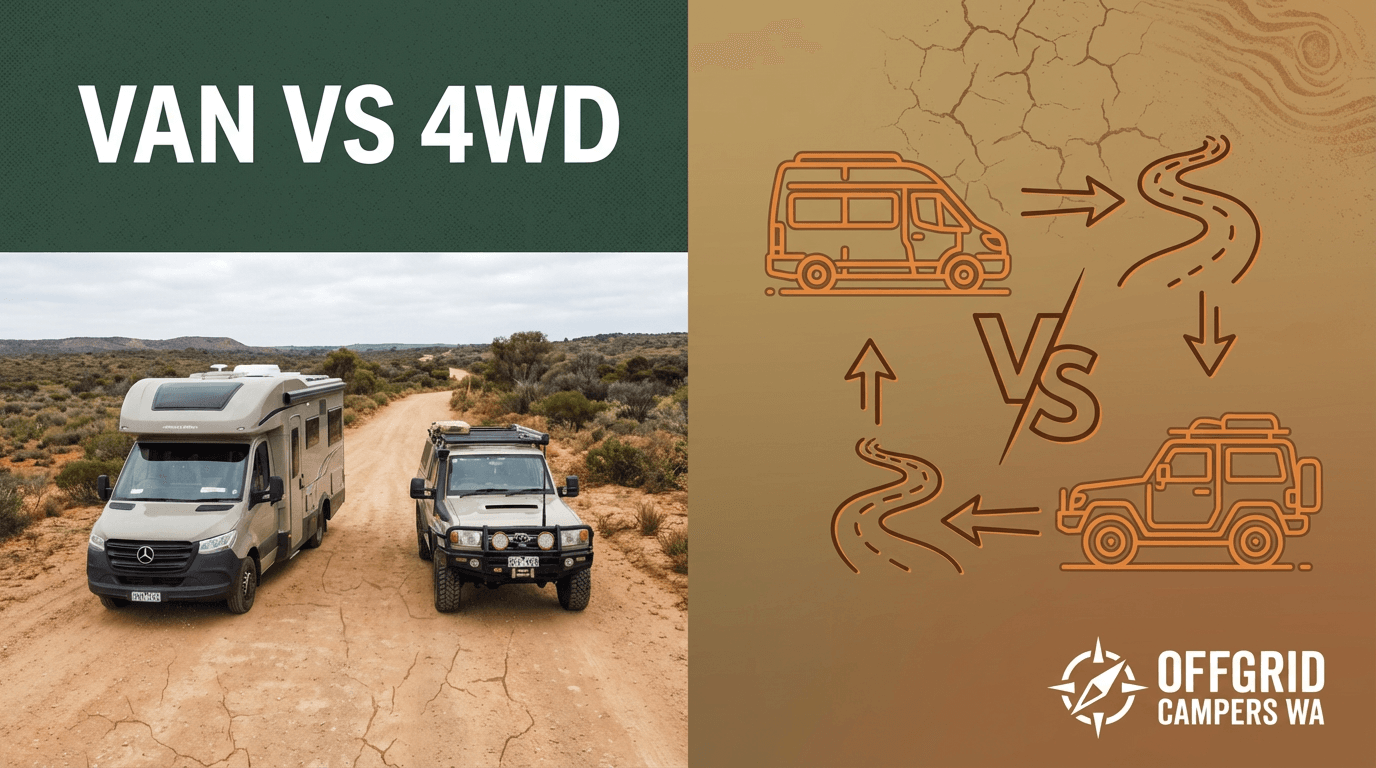
Planning a Western Australia road trip and stuck between a campervan and a 4WD camper? It’s the right question to ask early, because the wrong vehicle either costs you money you didn’t need to spend or leaves you parked at a locked gate.
Here’s the part most comparison guides skip. For the trips our hirers actually do, the south-west loop, the south coast to Esperance, the Coral Coast run, you are not choosing between a soft road tourer and a hardcore outback machine. You’re choosing between a 2WD campervan with a fixed bed and a 4WD camper with rooftop tents and a bit more traction on gravel access roads. That’s a much more useful comparison, so that’s the one this guide makes.
The real question for a WA trip
Most of Western Australia’s headline drives are sealed. Perth to Margaret River, the Great Southern down to Albany and Denmark, the Coral Coast Highway up to Kalbarri and beyond, all bitumen. The gravel usually only starts on the last few kilometres into a campground or a national park lookout.
So the question is rarely “can this vehicle handle the outback.” It’s: how do you want to sleep, how many of you are there, and how much setup are you willing to do at camp each night? Get those three right and the campervan-versus-4WD decision answers itself.
What you get with a campervan
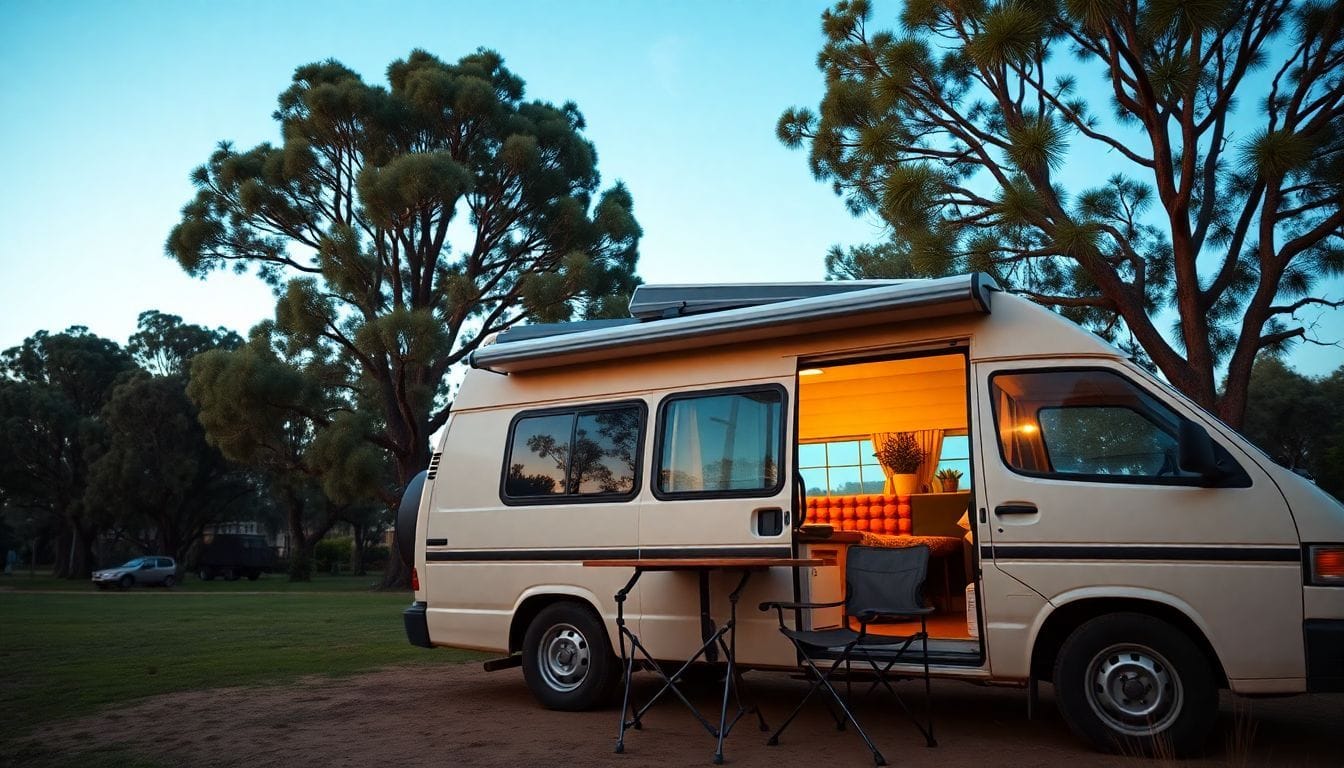
A campervan is your transport and your accommodation in one vehicle. Most of our vans are Toyota HiAce based, set up with a fixed bed, an induction kitchen, a fridge-freezer, 300Ah lithium and 200W of solar, so you’re not chasing powered sites every night.
The big advantage is no nightly setup. The bed is already made. You pull in, level up, put the kettle on. After a long day driving the West Coast or the South Western Highway, that matters more than people expect. A van like the Voyager, a HiAce with a fixed bed bigger than a queen and a full-wall awning, is the proper-camper option if you want comfort over capability.
Campervans are easy to drive and easy to park in town, they’re generally lighter on fuel than a loaded 4WD, and they cover the popular sealed routes without fuss. If your itinerary is mostly bitumen, you probably don’t need to overthink the vehicle.
The trade-off: a 2WD van wants firm ground. Loose gravel, sand or a steep, washed-out campground entrance is where it gets nervous. That’s fine for most south-west and Coral Coast trips, but worth knowing before you book.
What you get with a 4WD camper
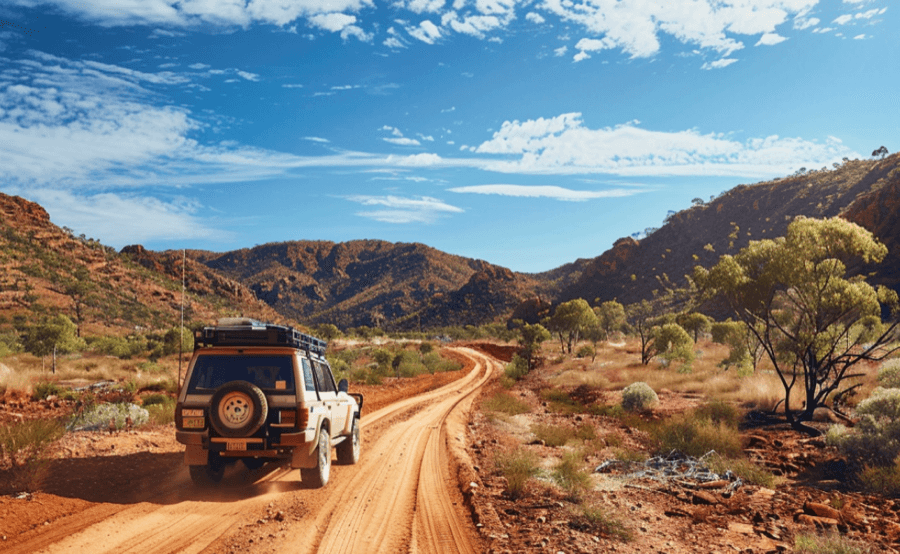
A 4WD camper gives you traction and a higher-clearance vehicle, usually with one or two rooftop tents rather than a fixed interior bed. In our fleet that’s vehicles like the Wanderer and the family-sized Bakkie, both built on 4WD utes with the same off-grid power and fridge setup as the vans.
It’s worth saying they don’t cost much more per day than a van, and a lot of people choose one for the reassurance as much as the capability, the higher driving position, the bull bar and the extra clearance feel good on long, empty highways and on the formed gravel access into the parks. If that peace of mind matters to you, it’s a fair reason on its own.
Be clear about what “4WD” buys you here. It’s confidence on well-maintained gravel access roads, the kind you meet getting into Karijini, Cape Range or a national park camp. It is not a licence for sand driving, river crossings or remote tracks. More on that below, because it’s where renters get caught out.
The rooftop tent is the other difference. It sleeps you up off the ground and frees the vehicle for two more people below on a model like the Bakkie, which is why families and groups of four lean this way. The cost is setup: tents go up and down each day, and that gets old in wet weather. If you want zero nightly setup, a van wins.
Where you can and can’t drive either one
This is the honest bit, and it applies to every vehicle in the fleet, van or 4WD.
Our campers are built for sealed roads and short, well-formed unsealed access into campsites. They are not permitted on, and not covered by insurance on:
- Sand dunes and beach driving
- River crossings
- Soft-sand roads and heavily corrugated unsealed roads
- The Gibb River Road, Canning Stock Route, Gunbarrel Highway and Holland Track
- Any track needing medium-to-advanced off-road skill
If the romance of your trip is the Gibb River Road or driving onto a beach, neither our campervans nor our 4WD campers are the right hire, and it’s better to know that now. A 4WD here means traction and clearance for gravel access, not a remote-expedition rig. If your route includes long gravel stretches, message Dorian before you book and he’ll tell you straight whether it’s on or off.
Two specific places people ask about: the western side of Francois Peron National Park and the Nyinggulu (Ningaloo) Coastal Reserve. Both are off-limits in any of our vehicles, and not because our 4WDs aren’t capable. The Francois Peron tracks are corrugated badly enough to have broken genuinely capable, privately owned 4WDs, and the coastal-reserve access is soft sand and water crossings. That’s a liability no rental or insurer can carry. The trick most travellers use is simple: take the camper for the sealed trip and book a local half-day 4WD tour for the one or two extreme spots, it usually works out cheaper than hiring a specialist vehicle anyway, and someone else takes the risk.
Match the vehicle to your route
The cleanest way to choose is to look at where you’re actually going.
- South-west loop (Perth, Margaret River, Pemberton, Albany, Denmark, roughly 1,300km, all sealed). A campervan is plenty. Comfortable, easy, no setup.
- South coast to Esperance (around 700km each way, sealed). Campervan again, unless you’re four people and want the rooftop-tent space, then a 4WD camper makes sense for sleeping config, not for terrain.
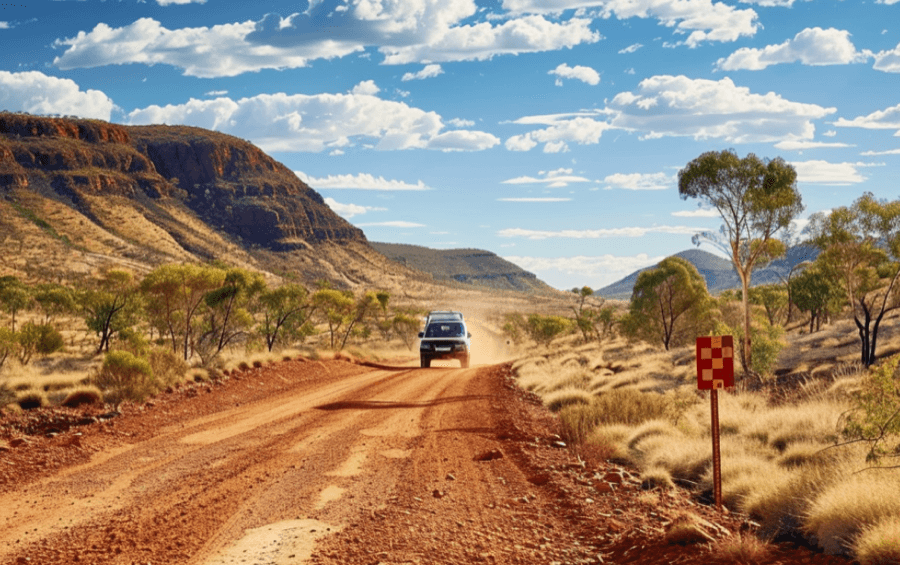
- Coral Coast to Kalbarri, Coral Bay and Exmouth. Sealed all the way on the highway. A van handles it; a 4WD camper is the call if you want gravel-access confidence around Cape Range or you’re travelling as a family. Note the long, serviced-free stretches, fill water and fuel at Carnarvon before the run north.
Across all of these, the distances are the trap, not the driving difficulty. WA is easy to underestimate on a map. Keep daily drives realistic and either vehicle will do the job.
Sleeping setup, group size and comfort
Beyond the route, the decision usually comes down to how you camp.
- Couples who want comfort: a 2WD campervan with a fixed bed. No nightly setup, easy to drive.
- Families or groups of four: a 4WD camper with rooftop tents sleeps more and keeps the vehicle interior free for gear and kids.
- You don’t mind a bit of setup and want gravel-access confidence: a 4WD camper.
- You want the simplest possible trip: a campervan, every time.
Both options have proper child-seat anchor points if you’re travelling with kids, bring your own compliant seat and flag it when you book.
Cost and fuel: the honest numbers
A 4WD camper generally costs a little more per day to hire and more to run, because a loaded diesel 4WD uses more fuel than a 2WD van. Our daily rates start from $140 for a van and sit a little higher for the 4WD campers, the live, current price for any vehicle is on its Camplify listing, which is the source of truth.
What stays the same across the fleet: comprehensive insurance, NRMA-style roadside, the WA Parks Pass and the off-grid power setup are all included, so the headline daily rate isn’t hiding a stack of extras. If you want to understand how the insurance excess works and how to reduce it, we’ve explained it plainly on the camper excess page.
The other real cost is your time. A campervan saves you setup every night. A 4WD camper gives you flexibility and sleeping space. Decide which one you’ll value more at the end of a long driving day.
Our pick for the common trips
For most first-time WA trips that stick to sealed highways and serviced campgrounds, the south-west, the Great Southern, the Coral Coast, a campervan is the simpler, cheaper, more comfortable choice. Reach for a 4WD camper when you’re four people who need the extra beds, or when you genuinely want gravel-access confidence and don’t mind the daily tent setup.
Still unsure? Compare the campervan range against the 4WD campers, or send Dorian your route and he’ll tell you which vehicle fits and which one to skip.
FAQs
Can I take a campervan on unsealed roads in WA?
On short, well-formed gravel access into a campsite, yes. On soft sand, beaches, corrugated tracks or river crossings, no, that applies to both our campervans and 4WD campers, and those areas aren’t covered by insurance. If you’re unsure about a specific road, ask before you book.
Do I need a 4WD to see Western Australia properly?
No. The vast majority of WA’s well-known drives, the south-west, the Great Southern, the Coral Coast Highway, are sealed and suit a campervan. A 4WD camper helps with gravel-access confidence and sleeping space, not with reaching the headline sights.
How does storage compare between a campervan and a 4WD camper?
A campervan keeps everything inside and packed once. A 4WD camper with rooftop tents frees up interior space for gear, which suits families with more to carry. Neither is short on room for a normal trip’s luggage, food and camping kit.
Do I need a special licence to hire a campervan or 4WD in WA?
A valid full driver’s licence is fine, and we accept international licences. There’s no special class needed for our vehicles. Bring the physical licence to pickup, a photo isn’t enough.
Which is better for a long sealed-highway trip up the coast?
A campervan, in most cases. The Coral Coast Highway is sealed, so you get the comfort of a fixed bed and better fuel economy. Choose the 4WD camper only if you need the extra beds or want gravel-access confidence near the national parks.