Cape Le Grand, about 45 minutes east of Esperance, is the one a lot of people build a whole WA trip around, and it lives up to it. Squeaky white sand, kangaroos lounging on the beach at Lucky Bay, granite peaks tumbling into turquoise water. This guide covers the beaches, the hikes, where to camp, and the practical stuff: how to get there, what it costs, and where you can (and can’t) take a vehicle.
Quick facts
- Where: ~56km east of Esperance; about a 7–8 hour drive from Perth (it’s the south-coast trip, see the Perth to Esperance guide).
- Access: sealed road in, fine for a 2WD, you do not need a 4WD to reach Lucky Bay.
- Entry: $17 per vehicle, covered by the WA Parks Pass included with our hire.
- Camping: two campgrounds, both bookable ahead, they fill months out in peak season.
Getting there, and yes, a 2WD is fine
This is the question people ask most: do you need a 4WD? No. The road from Esperance into the park is sealed, and the main beaches and trailheads, Lucky Bay, Hellfire Bay, Thistle Cove, Frenchman Peak, sit on sealed or well-formed access. A 2WD campervan gets you to all of it.
A 4WD camper helps if you want to drive on the hard sand (more on that below) or reach the rougher eastern corners like Dunn Rocks, but it isn’t needed for the headline sights.
The beaches
It’s no stretch to say these are among the best beaches anywhere, they’re the reason most people make the trip.
Lucky Bay
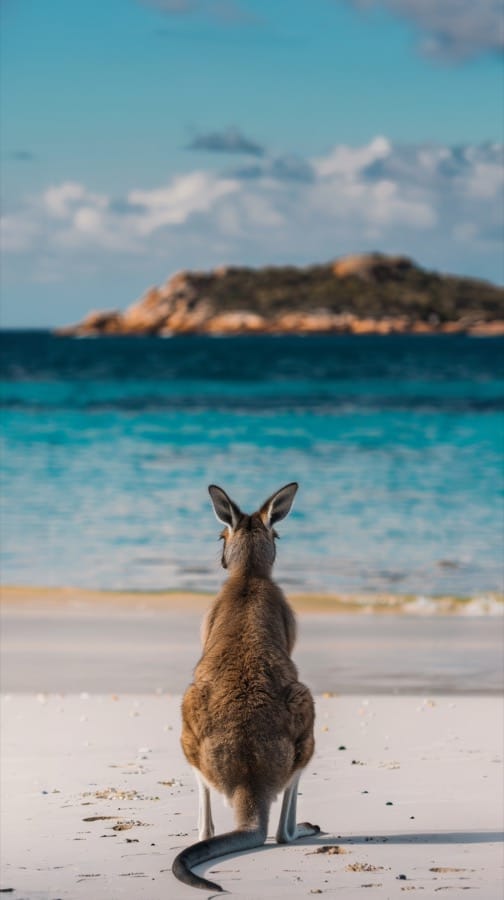
The famous one. Lucky Bay is regularly ranked among the best beaches in the world, and the sand really does squeak underfoot. What makes it Lucky Bay, though, are the western grey kangaroos that laze on the sand, early morning or late afternoon is your best chance to see them up close. The water’s calm and protected, good for a swim or snorkel, with the islands of the Recherche Archipelago out on the horizon.
Hellfire Bay
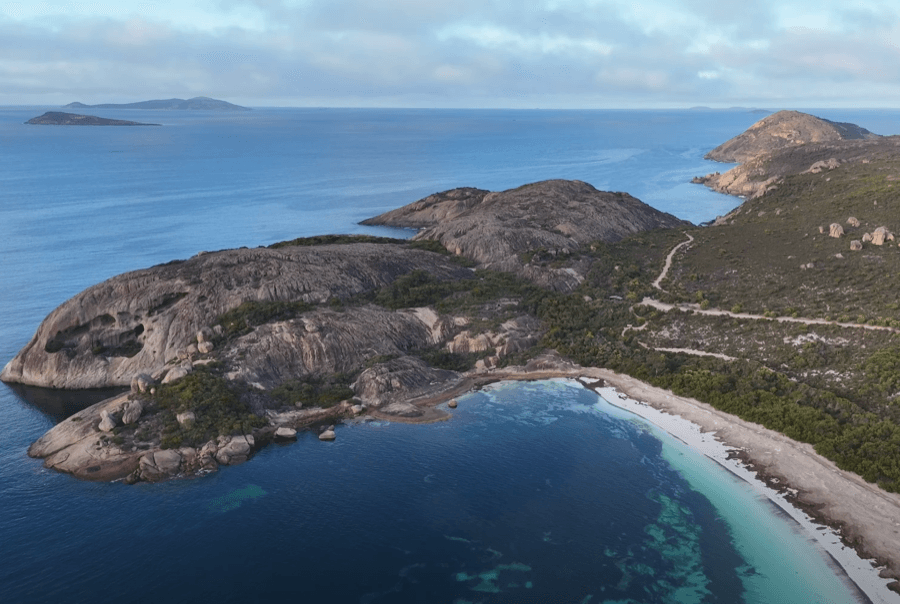
Don’t read too much into the name, Hellfire is a sheltered, crescent-shaped beach hemmed by big rounded granite boulders. The colour contrast at sunrise and sunset is the draw. There’s a picnic area with gas barbecues and shaded tables, so it’s a good lunch stop.
Thistle Cove
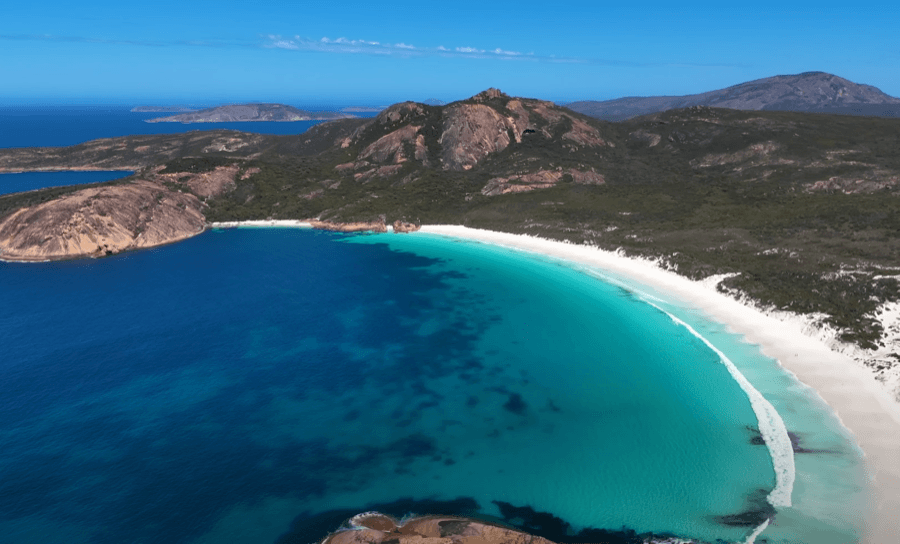
A short drive from Hellfire, Thistle Cove is quieter and home to the “Whistling Rock”, a granite boulder that hums as the sea breeze funnels through its cracks. More secluded, so you might get it to yourself.
Le Grand Beach
Different in character: a long, open beach stretching over 20km, with the smaller, more secluded Le Grand Beach Campground tucked behind the dunes. Note this is a soft-sand beach in stretches, see the driving note below before you think about taking a vehicle onto it.
Can you drive on the beach?
Short answer for our hirers: yes, but only on the hard sand at Lucky Bay (and Wharton Beach), and only with care. That’s the one place in the whole fleet’s territory where we permit beach driving.
What we don’t allow: driving the soft-sand stretches, or the run from Wylie Bay through to Cape Le Grand along the beach. Soft sand, tides and recovery situations are exactly the kind of thing rental insurance won’t cover. If you’re not confident reading a beach and the tide, just park and walk on, it’s a short carry. If you want the option of the hard sand, a 4WD camper is the one to book.
The hikes
Frenchman Peak
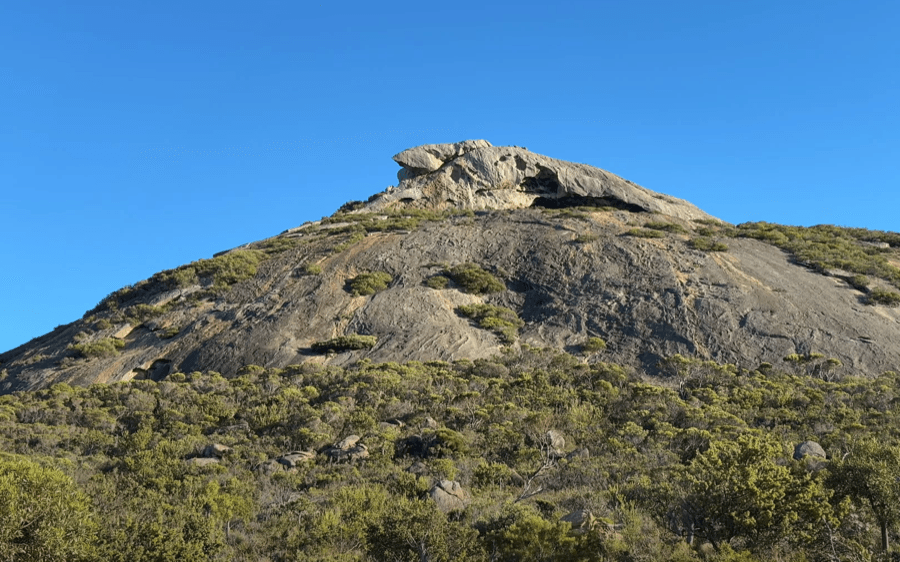
The standout climb. Frenchman Peak (Mandooboornup) is 262m, a 3km return that’s steep and graded hard, allow about two hours and a decent level of fitness, because it’s largely up smooth granite. The reward is a huge panorama over the park and out to the archipelago, plus a cave-like arch near the top that frames a great photo. Skip it in wet or windy weather, the rock turns slippery and genuinely dangerous.
Cape Le Grand Coastal Trail
For more of a mission, the 20km coastal trail links Rossiter Bay to Le Grand Beach across beaches, granite headlands and coastal heath. You can do it in a long day, but it breaks neatly into sections with vehicle access at most bays:
- Rossiter Bay to Lucky Bay: 6.6km, 2–3 hours, moderate.
- Lucky Bay to Thistle Cove: 2.5km, ~1 hour, the easy, popular bit.
- Thistle Cove to Hellfire Bay: 4.7km, 2–3 hours, steep granite (slippery when wet).
- Hellfire Bay to Le Grand Beach: 6.2km, ~3 hours, the most demanding.
Wildlife and wildflowers
The Lucky Bay kangaroos are the headline, but there’s more: pygmy possums and quenda (southern brown bandicoots) in the heath, and over 110 bird species, white-bellied sea eagles overhead, rock parrots and emu-wrens in the scrub. Bottlenose dolphins are common in the bays, and southern right whales pass offshore on their migration between May and October. Visit in spring and the coastal heath erupts with wildflowers, banksias, hakeas, grevilleas and the park’s own qualup bell.
Camping
You can see Cape Le Grand as a day trip from Esperance (45 minutes each way), but a night or two at one of the two coastal campgrounds is the better play, sunrise kangaroos and the light on that sand are worth waking up to.
- Lucky Bay Campground: 56 upgraded sites for tents, camper trailers and caravans, with solar-heated showers, modern toilets and camp kitchens. Steps from the beach, and the Lucky Bean café van often parks up in the morning.
- Le Grand Beach Campground: smaller and quieter (15 sites) behind the dunes, with toilets, showers and barbecues.
Book both through WA’s Park Stay site, bookings open exactly 180 days ahead, there’s no walk-up camping, and you can’t reserve a specific site (you pick from what’s free on arrival). Peak weekends and school holidays often go the day they open, but cancellations free up regularly in the 4–6 weeks before a busy date, so it’s worth checking back. Camping runs about $20 per adult ($15 concession, $5 per child) plus the vehicle entry fee. If you’ve got a 4WD and want a free option, Membinup Beach or the free community campground at Condingup, both outside the park, are basic but popular.
Practical tips
- Best time: spring (Sep–Nov) for wildflowers and hiking; summer for swimming (and crowds); autumn for stable, quieter weather; winter is peaceful and best for whales.
- No shops in the park: bring all food and supplies from Esperance.
- Limited mobile reception: download offline maps before you arrive.
- Flies can be full-on in the warmer months; a head net is worth packing.
- Dieback is a real threat, use the boot-cleaning stations at the trailheads and stick to marked tracks.
Plan your Cape Le Grand trip
Cape Le Grand is the payoff at the end of the south-coast drive, and it’s an easy one to do in a campervan, sealed roads, real campgrounds, no 4WD needed. Read the Perth to Esperance route guide to plan the drive down, compare the campervan and 4WD camper options, or check live availability on the fleet listings. The WA Parks Pass that comes with your hire covers the park entry.
FAQs
Do you have to pay to get into Cape Le Grand?
Yes, $17 per vehicle per day. It’s covered for free by the WA Parks Pass included with our hire. Camping is a separate fee, around $20 per adult per night ($15 concession, $5 per child).
Can you get to Lucky Bay in a 2WD?
Yes. The road in is sealed and Lucky Bay’s car park is 2WD-accessible, no 4WD required. A 4WD only matters if you want to drive on the hard sand or reach the rougher eastern corners.
Can you camp at Cape Le Grand?
Yes, at Lucky Bay and Le Grand Beach campgrounds, both must be booked through WA’s Park Stay site, and both fill months ahead in peak season.
How far is it from Perth?
Around 720km, or a 7–8 hour drive, it’s the end point of the Perth-to-Esperance south-coast trip rather than a day trip.
When’s the best time to visit?
Spring for wildflowers and comfortable hiking, summer for swimming. Esperance can be cold and wet even in summer, so pack a layer and, if you can, time your visit around clear weather.