Feeling a bit stuck on what to pack for your big Western Australia camping trip? I get it. As someone who has spent years exploring every corner of this massive state, I know that getting the gear right is the first step to an incredible trip.
This isn’t just a list; it’s a guide to making sure you have exactly what you need for a comfortable, safe, and truly memorable time exploring WA’s stunning landscapes. We’ll cover everything from your shelter to your camp kitchen, so you can hit the road with confidence.
Here’s a quick look at the absolute must-haves for your WA road trip:
- Shelter & Bedding: Your choice of a swag, rooftop tent, or campervan setup.
- Kitchen Gear: A reliable portable stove, a quality cooler or fridge, and reusable cookware.
- Safety Essentials: A well-stocked first-aid kit, offline maps, and reliable communication.
- Camp Comforts: Good camp chairs, a sturdy table, and effective lighting.
Your Home on Wheels: Shelter Essentials
Picking the right shelter is the most important decision you’ll make. It’s your protection from the hot Pilbara sun and the cool nights down south.
Campervan or 4×4 Campers
For the perfect mix of freedom and comfort, nothing beats a campervan or a 4×4 camper. They give you a proper bed, a small kitchen, and storage, all ready to go.
As Perth-based blogger Emma Reid from Life Journey for Two puts it, the ability to set up in minutes is a real advantage in remote areas. Brands like Britz and Apollo are common sights on WA roads, offering reliable ready-to-go options for travellers.
Your choice really depends on where you plan to go. A standard campervan is great for sealed roads, while a 4WD camper opens up a world of adventure.
| Option | Best For | Things to Consider |
|---|---|---|
| Campervan | Main roads, national parks with sealed access, ease of driving. | Limited access to off-road tracks and beach campsites. |
| 4WD Camper | Remote destinations like the Gibb River Road, beach camping, and rugged trails. | Higher fuel use and requires more confidence to drive on tough terrain. |
Either way, you’re saving money on hotels and getting to wake up in some of the most beautiful spots imaginable.
Rooftop Tents & Awnings
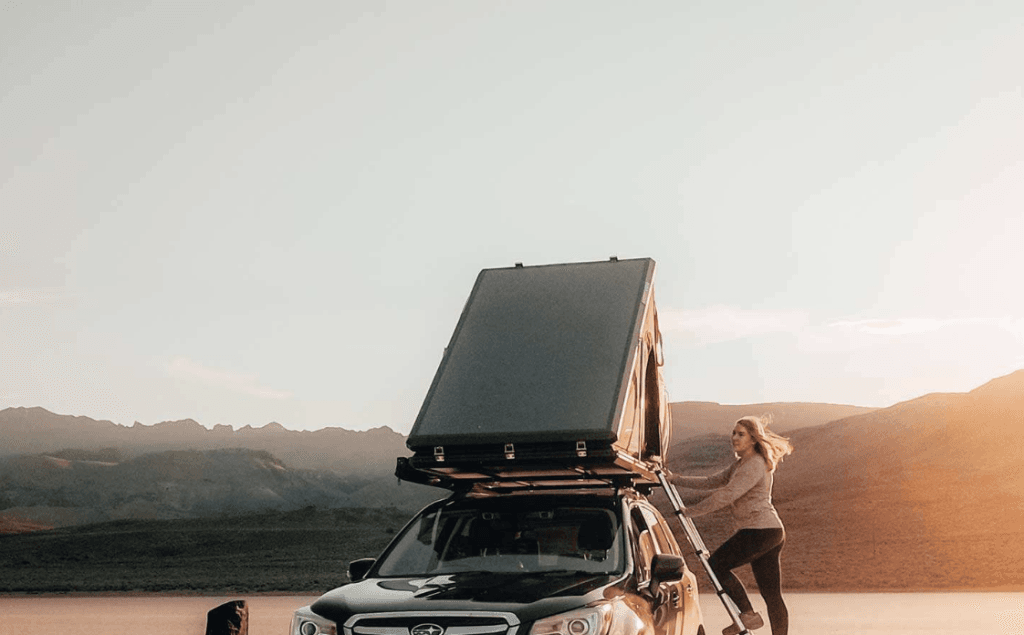
Rooftop tents have become incredibly popular for a reason. They get you off the ground and can be set up in just a few minutes, which is a blessing after a long day of driving.
When you’re looking at our fully-equipped 4WD campers, you’ll see how these setups work. Popular brands like ARB and Darche offer models that can be ready for sleeping in under five minutes.
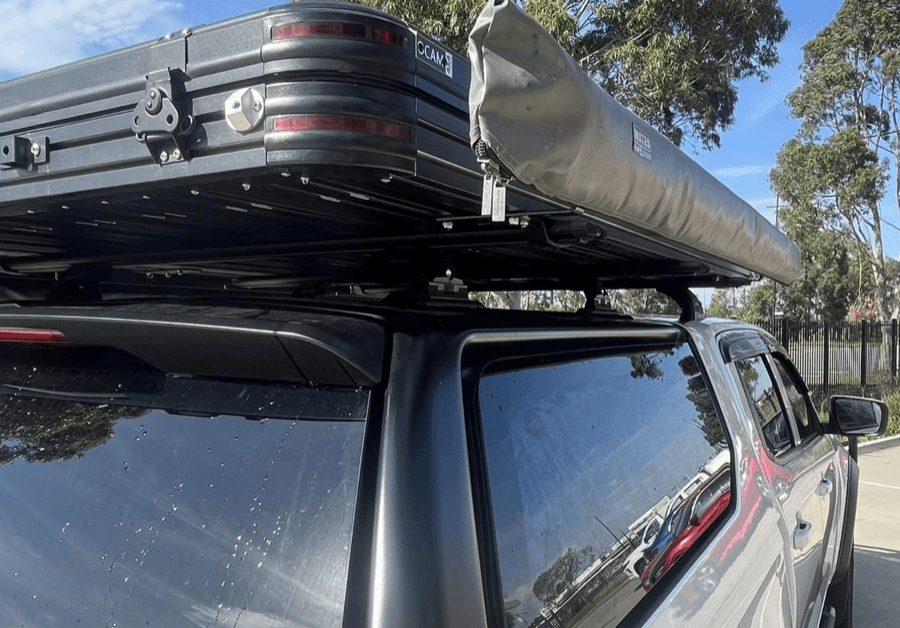
Being elevated keeps you away from curious critters and damp ground. An awning is the perfect partner to a rooftop tent, giving you a shaded spot for cooking or relaxing.
A 2024 market report from Statista confirms that the camping equipment market in Australia continues to grow, with rooftop tents being a significant driver of that trend. They are perfect for people who move campsites frequently and value a quick setup.
Camping Swags
You can’t talk about Australian camping without mentioning the swag. It’s a tough, all-in-one bedroll with a mattress and protective canvas cover.
Modern swags are a huge step up from the traditional bedroll. Today’s designs often feature:
- A comfortable, built-in foam mattress.
- Tough, weather-resistant canvas.
- Small poles to create more headroom.
- Full-length insect mesh for bug-free ventilation.
As the team at outdoor retailer Snowys Outdoors often says, there’s nothing quite like sleeping in a swag under the stars. They are built to last and handle WA’s tough conditions with ease.
A good quality swag from a brand like Darche or 23ZERO can cost between $250 and $500. While that’s more than a basic tent, their durability and simplicity make them a great investment for frequent campers.
Ground Tarp or Mat for Outdoor Setup
A simple ground tarp is one of the most useful items you can pack. It helps define your living space and keeps sand and dirt out of your sleeping area.
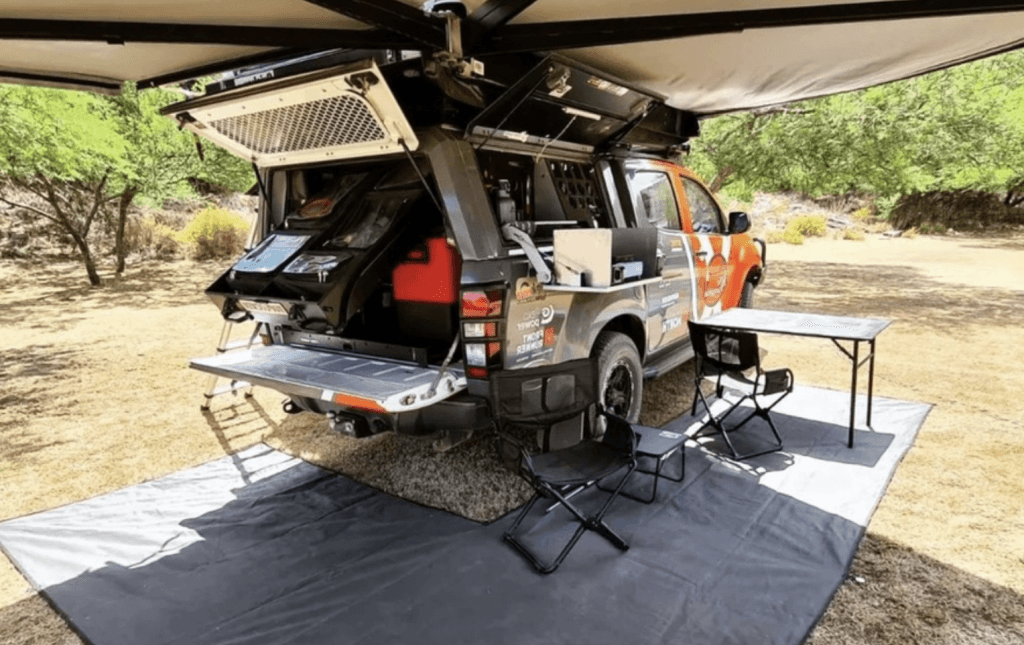
The experts at RAC WA point out that a good tarp does more than just keep things clean. It also provides a moisture barrier and can protect your tent floor from sharp rocks.
Here’s what a quality ground tarp can do for you:
- Keeps your gear off wet or dusty ground.
- Creates a clean zone for cooking and eating.
- Reduces the amount of dirt you track into your tent or van.
- Protects your expensive tent floor from damage.
I always bring at least two. One for under the awning to create a living area, and another smaller one to use as a doormat outside the tent.
Bedding and Sleeping Gear
A good night’s sleep is everything after a day of driving and exploring. What you sleep on and in will make all the difference.
Sleeping Bags or Portable Mattresses
The climate in WA varies wildly, so your sleeping bag needs to match your destination. A lightweight bag with a +5°C to +10°C comfort rating is perfect for the north.
For the South West in winter, you’ll want something warmer, closer to a 0°C or -5°C rating. You can find great options from brands like Sea to Summit or Coleman at retailers like BCF or Anaconda, as campers on Reddit often discuss.
A self-inflating mat from a brand like Therm-a-Rest or Zempire adds a fantastic layer of comfort and insulation from the cold ground. They are a huge step up from old-school foam rolls.
Don’t forget a sleeping bag liner. They serve multiple purposes:
- They add extra warmth on cold nights.
- They keep your sleeping bag clean, so you wash it less often.
- On hot nights, you can sleep in just the liner.
Always check the temperature rating and packed size before you buy any sleeping gear.
Pillows and Extra Blankets for Cooler Nights
Even in summer, the temperature in WA’s desert and inland areas can drop dramatically overnight. A 15-20°C drop is not uncommon, so extra layers are a must.
My pro-tip? Bring your pillow from home. Inflatable camp pillows just aren’t the same, and a good pillow is key to waking up refreshed.
An extra wool blanket is incredibly versatile. You can use it for:
- An extra layer on a surprisingly cold night.
- A picnic blanket for a lunch stop.
- Something warm to wrap around you by the campfire.
As the She’s a Trip blog wisely suggests, packing a beanie and some warm socks takes up almost no space. They can make a huge difference if a cold front rolls in unexpectedly.
Cooking and Kitchen Equipment
A good camp kitchen setup turns cooking from a task into a pleasure. There’s nothing better than a hot meal under the stars.
Portable Stoves or BBQs
For simple trips, a compact stove like a Jetboil or MSR PocketRocket is fantastic for boiling water fast. They are perfect for coffee and rehydrating meals.
If you take your coffee seriously, a portable espresso maker like a Wacaco Minipresso is a small luxury that feels amazing in the middle of nowhere. For more serious cooking, a dual-burner stove from Coleman or a portable BBQ like a Weber Baby Q gives you the flexibility to cook proper meals.
Don’t forget the small but essential kitchen items:
- A reliable lighter and waterproof matches.
- Enough fuel for your stove, plus a little extra.
- Cooking oil and basic spices in small, sealed containers.
- Aluminium foil, which has a hundred uses around the campsite.
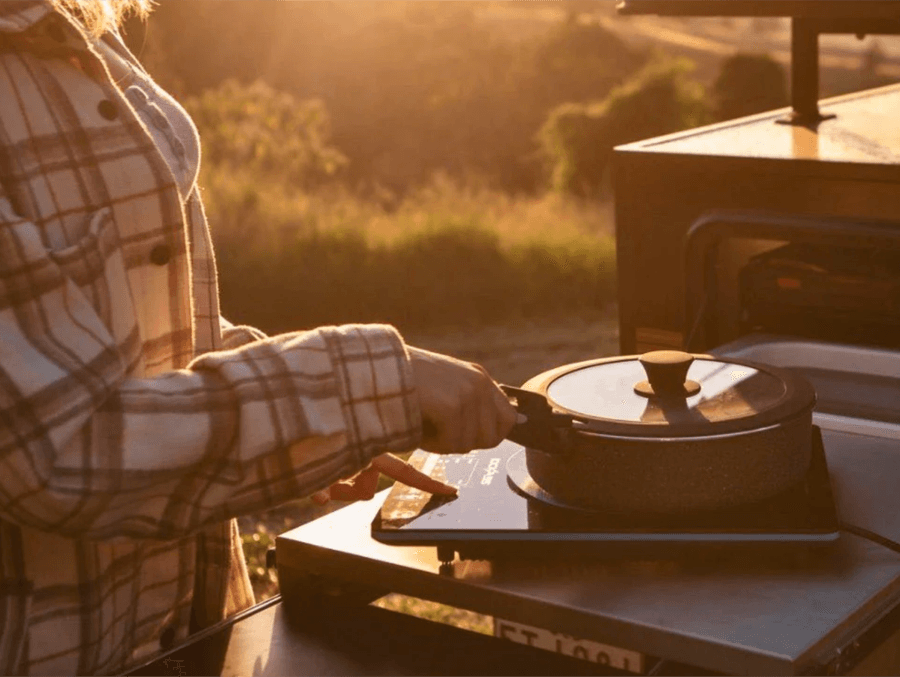 Induction cooktops are becoming a popular and safe option for enclosed campers.
Reusable Cookware, Utensils, and Plates
Using reusable gear is better for the environment and much more durable than disposables. It’s all about leaving these beautiful places exactly as you found them.
Your essential kitchen kit should include:
- A nesting pot and pan set to save on space.
- Durable plates and bowls, like those made from enamel or melamine.
- A full set of cutlery for each person.
- A good sharp knife and a small cutting board.
- A can opener and bottle opener.
For washing up, a collapsible sink, some biodegradable soap, and a scrubbing brush are all you need. A two-basin system is a water-wise method: one for washing and one for a quick rinse.
Food and Water Storage
Proper storage is all about food safety and convenience, especially when the nearest supermarket is hundreds of kilometres away.
Cooler or Portable Fridge for Perishables
A good old-fashioned esky (cooler) works well for weekend trips. High-end brands like Yeti can keep ice for several days, but you’ll need to manage it carefully.
For any trip longer than a few days, a portable 12V fridge is one of the best investments you can make. As you’ll see discussed on Reddit forums, brands like Dometic, Engel, and ARB are trusted by Aussie travellers for their reliability.
The benefits of a portable fridge are clear:
- You get consistent, reliable cooling without worrying about ice.
- No more soggy food sitting in melted ice water.
- You have more internal space since there’s no ice taking up room.
- It’s much safer for keeping meat and dairy fresh in the heat.
A 40-50 litre fridge is a great size for two people on a week-long trip. It gives you enough space for fresh food without being too bulky.
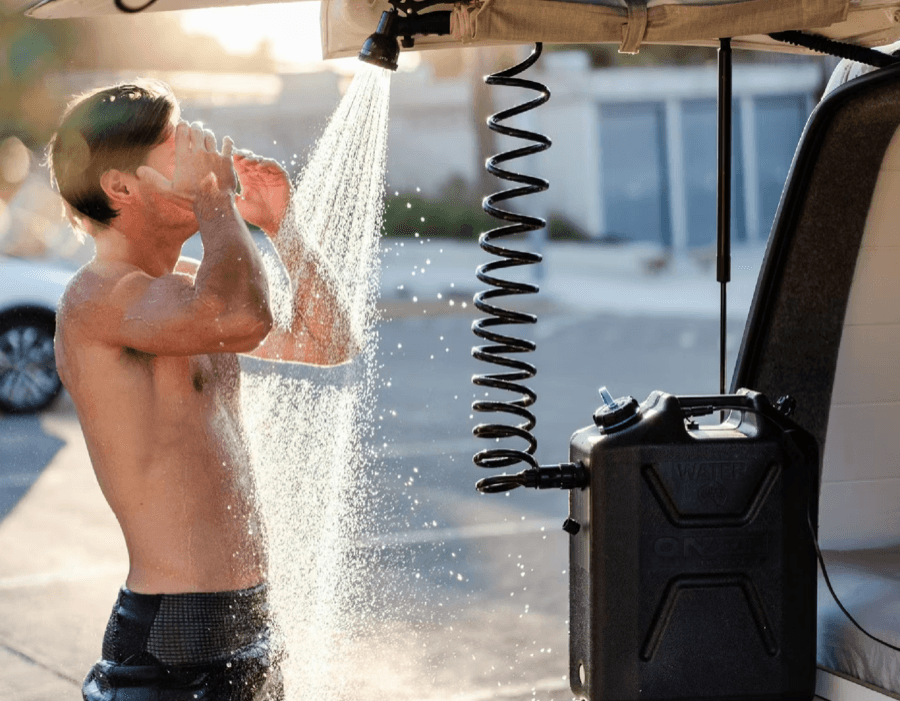
Water Containers with Dispensers
Never underestimate how much water you’ll need. In WA, having enough water is a serious safety consideration.
I recommend carrying at least:
- A minimum of 5 litres of water per person, per day.
- An extra 20-litre container as an emergency backup.
- A mix of large jerry cans for bulk storage and smaller bottles for day trips.
The Explore Parks WA website is a great resource for checking if potable water is available at specific campsites. However, I always suggest carrying a water filter or purification tablets, just in case a rainwater tank is empty or the quality is questionable.
A container with a built-in tap is perfect for setting up a simple handwashing station at your campsite. It makes cooking and staying clean so much easier.
Safety and Navigation Gear
Being prepared isn’t about expecting the worst, it’s about being able to handle a small problem before it becomes a big one. This gear is non-negotiable.
First Aid Kit
A good first-aid kit is more than just a box of plasters. For WA, your kit needs to be ready for everything from scratches to more serious situations.
Your kit should always include:
- Pressure bandages for snake bites (and know how to use them).
- Antiseptic wipes and solution.
- Painkillers and anti-inflammatory medication.
- Tweezers and scissors.
- Antihistamines for insect bites and allergic reactions.
- Any personal medications you need, with extra supply.
Travel hubs like Summerstar tourist parks often recommend adding preventative items too. This includes a strong insect repellent with DEET, high-SPF sunscreen, and hand sanitiser.
Before every trip, I open my first-aid kit to check that nothing has expired and restock anything I used last time. It’s a five-minute job that could make all the difference.
GPS or Offline Maps for Remote Areas
You cannot rely on your phone’s mobile service in most of WA. Once you leave the major towns, reception is patchy at best and often non-existent.
As the team at Life Journey for Two emphasizes, having more than one navigation system is smart. A dedicated GPS unit or an app with offline maps is essential.
Your navigation toolkit should include:
- An app like Hema 4×4 Explorer or WikiCamps with maps downloaded to your device.
- A physical paper map of the region as a foolproof backup.
- A simple compass, and the basic knowledge to use it.
For truly remote travel, I strongly recommend carrying a Personal Locator Beacon (PLB). According to the Australian Maritime Safety Authority, PLBs were used to initiate 264 rescues in 2023 alone. It’s a device you hope you never have to use, but it can be a lifesaver.
Lighting and Power Supplies
Good lighting makes your campsite safer and more comfortable after dark. And in today’s world, a way to keep your devices charged is a modern camping essential.
Rechargeable Lanterns or Headlamps
LED technology has made camp lighting bright, efficient, and affordable. As camping trends on platforms like Pinterest show, good ambient lighting is now a key part of a comfortable campsite.
I recommend packing a few different types of lights:
- A headlamp for each person is a must-have for hands-free tasks.
- A bright lantern to light up your main living area.
- A handheld torch for spotting things in the distance.
Rechargeable options are fantastic because you can top them up from your car or a power bank during the day. This saves you from carrying piles of spare batteries.
The advice from the She’s a Trip blog is spot on: a headlamp is probably the single most useful light you’ll own. It makes cooking, finding things in your tent, and late-night bathroom trips so much easier.
Power Banks or Solar Panels for Devices
Keeping your phone, camera, and navigation tools charged is important. A simple power bank is fine for a weekend, but for longer trips, you’ll need a more sustainable solution.
Portable power stations from brands like Jackery or Goal Zero are a great option. They can be charged from your car or with a portable solar panel and can power everything from your phone to a 12V fridge.
As we often explain to our customers, a portable solar panel setup gives you true off-grid freedom. Combining a 100W or 200W panel with a power station means you can stay at a remote campsite for days without ever needing to start your car.
For vehicle-based camping, a dual-battery system is the ultimate solution. It lets you run your fridge and other accessories from a second battery, so you never have to worry about draining your car’s starting battery.
Storage Solutions
Good organisation saves you so much time and frustration. Knowing exactly where everything is makes setting up and packing down a smooth process.
Camping Organisation Essentials
As RAC WA rightly points out, an organised campsite is a happy campsite. The key is to have a dedicated place for everything.
These storage items are on my must-have list:
- Clear plastic tubs with secure lids (the Ezy-Storage range from Bunnings is popular).
- Labels for each tub (e.g., “Kitchen,” “Tools,” “Dry Food”).
- Dry bags for protecting electronics and clothes from water or dust.
- Compression sacks to make your sleeping bag and clothes take up less space.
- Heavy-duty garbage bags to pack out all your rubbish.
A great tip from seasoned campers on Reddit is to pack in modules. Have one tub for all your cooking gear, another for recovery gear, and so on. When you get to camp, you just pull out the tubs you need.
For food, sealed containers are essential to keep pests out and prevent spills. This is particularly important in national parks to avoid attracting unwanted wildlife to your campsite.
More Essential Camping Gear
These items might seem like luxuries, but they are the difference between “roughing it” and truly enjoying your time outdoors.
Camping Chairs
Trust me, a comfortablechair is one of the most important pieces of gear you’ll own. It’s your spot for morning coffee, evening meals, and relaxing by the fire.
Modern camp chairs have come a long way. You can now find chairs with:
- Small, built-in side tables.
- Insulated cup holders to keep your drink cool.
- High backs and padded seats for extra comfort.
- Reclining features for afternoon naps.
You don’t need to spend a fortune, but investing in a sturdy, comfortable chair from a brand like Oztent or Coleman is money well spent. Always check the weight rating and how small it packs down before you buy.
Camping Table
A stable table is another non-negotiable item. It gives you a clean, flat surface for preparing food, eating, and organising your gear.
There are a few common styles to choose from:
- Roll-top aluminium tables are lightweight and pack down very small.
- Folding plastic tables are sturdy and easy to clean.
- Some models have adjustable legs, which are brilliant for setting up on uneven ground.
Think about what you’ll use it for. If you plan on cooking on the table, make sure it’s a suitable height and has a heat-resistant surface.
Essential Extras for WA Conditions
Finally, there are a few extra items that are specifically useful for camping in Western Australia. These will make your trip much more comfortable.
Environmental Protection
As Explore Parks WA always reminds visitors, it’s our job to protect these amazing places. A few key items can help you minimise your impact:
- Biodegradable soap so you’re not harming waterways.
- A small shovel or trowel for digging catholes for toilet stops in remote areas.
- A fire blanket or small extinguisher for campfire safety.
- Reusable water bottles and coffee cups to reduce plastic waste.
Always carry out everything you bring in, including food scraps. It’s about leaving no trace.
Weather Considerations
WA’s weather can be extreme, so a few extra pieces of gear can make a big difference.
- A fly net for your head. In many parts of WA, especially inland, the flies can be relentless. It looks silly, but you’ll be glad you have it.
- A portable 12V fan for camping up north in the warmer months.
- Extra sand pegs for your tent or awning if you’re camping on the coast. Standard pegs won’t hold in the sand.
- A small dustpan and brush to keep sand out of your sleeping area.
Final Thoughts on Your Camping Essentials
A great camping trip in Western Australia is all about being well-prepared. This camping essentials checklist gives you a solid foundation, but always think about your specific trip and tailor it to your needs.
The goal is to have the right gear so you can stop worrying about your setup and start enjoying the incredible places you’re in. From the stunning gorges of Karijini National Park to the white-sand beaches of the south, being prepared lets you make the most of it.
So get your gear sorted, hit the road, and have an amazing time exploring this beautiful state. Happy camping!
FAQs
What’s on the ultimate camping checklist for WA road trips?
The ultimate list covers shelter, sleeping gear, cooking equipment, food and water storage, safety and navigation tools, lighting, and camp furniture. As noted by Explore Parks WA, you should also pack WA-specific items like strong insect repellent, a head fly net, and high-SPF sunscreen.
How do I prep for camping in WA’s national parks?
First, visit the Explore Parks WA website to check for park alerts, fire bans, and campsite facilities. Book your site in advance, as popular spots fill up quickly. Always bring extra water, and be prepared to take all your rubbish with you when you leave.
What kitchen items should I bring for car camping?
A reliable two-burner stove, a quality cooler or 12V fridge, and a set of nesting pots and pans are key. Don’t forget reusable plates, cups, and cutlery. As campers on forums like Reddit often mention, a good knife, a cutting board, and your favourite coffee-making gear are also essential.
How can I make my first camping trip in WA a success?
Start with a well-established campsite that has good facilities. This lets you get comfortable with your setup without being too remote. According to RAC WA, practicing setting up your tent or swag at home first is a great way to avoid stress at the campsite. Pack layers of clothing, as temperatures can change quickly.
What’s essential for camping with kids in WA?
Pack plenty of snacks and familiar foods, and bring entertainment like card games or a ball. A comprehensive first-aid kit with child-specific items is a must. Bring headlamps for everyone, and consider glow sticks for a bit of fun and to easily spot them in the dark.
Where can I find a comprehensive camping gear list for WA?
Retailers like BCF and Anaconda have excellent checklists on their websites. For official information, the RAC WA and Explore Parks WA sites are invaluable resources that provide guidance tailored specifically to Western Australian conditions. The best list, however, is one you refine over time with your own experience.