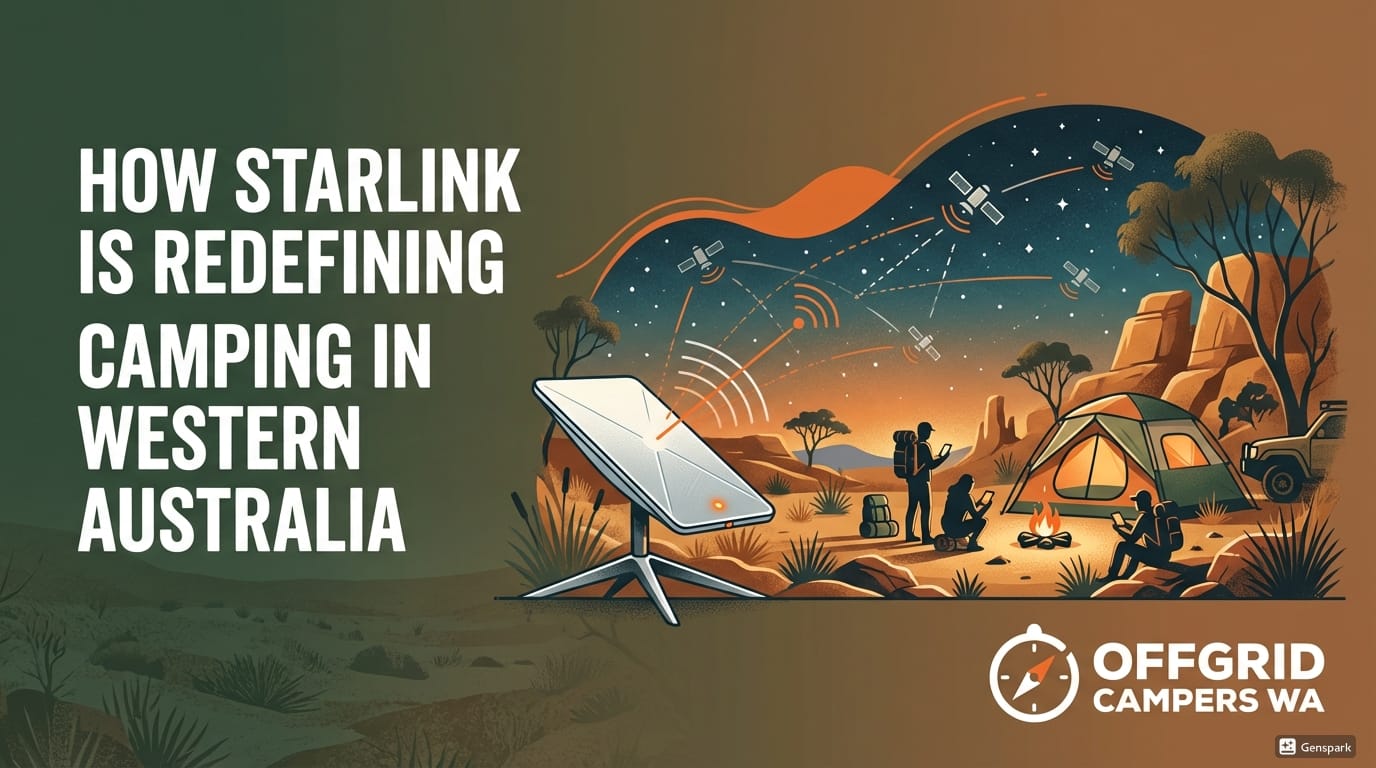
A few years ago, leaving a WA town meant going dark, no signal, no maps, no way to call for help short of an expensive satellite phone. Starlink changed that. For better and occasionally for worse, you can now camp deep in the outback and still hold a video call. This is what’s actually changed, the limits worth knowing, and whether to rent or buy.
Why mobile networks fail out here
Western Australia is bigger than most countries, and its mobile coverage thins out fast. Telstra, Optus and Vodafone work along the main highways and in towns, but drive 50km off the beaten track and you’re in a dead zone, the towers are simply too far apart and the terrain blocks what little signal there is. Telstra reaches furthest, but no mobile network covers the genuinely remote interior.
Older satellite internet (the geostationary kind) technically worked, but with 600ms-plus latency and tight data caps it was painful for anything beyond basic email. Starlink is different: a constellation of low-orbit satellites about 550km up, close enough to deliver usable speeds (typically 100–200 Mbps) and low enough latency for video calls and real-time apps.

What it actually changes
- Remote work goes anywhere. Digital nomads can extend a trip indefinitely, answer email from a Coral Coast beach, take a call from a national park. The bush became a workable office.
- Navigation and weather in real time. Live maps, road and fire updates, and forecasts before a long or remote leg, a genuine safety gain, not just convenience.
- Help is a call away. With internet you can make a voice or video call for assistance rather than relying solely on a costly satellite phone (though a beacon still matters, see the limits below).
- You can stay out longer. No need to drive back to town to check in with work or family, so the quiet, powered-site-free camps stay viable for days.
The Mini made it practical
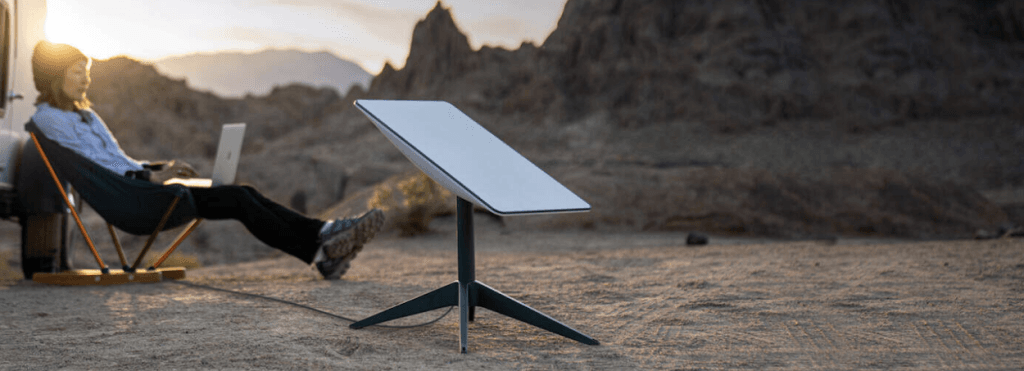
The original dish worked, but the Starlink Mini, a flat unit with the router built in, is what made it easy for vehicle travel. It’s light, packs away, draws little power (roughly 25–40W in use), and sets up in a couple of minutes with a clear view of the sky. On a camper with lithium and solar, that’s an easy load. (Quick clarification you’ll see muddled online: “Mini” is the hardware; “Roam” is the travel plan you run it on, they’re not the same thing.)
The limits nobody markets
Starlink is excellent, not magic. The honest caveats:
- Trees and gorges block it. It needs an open view of the sky. Dense jarrah forest in the south-west, or a deep gorge wall, can kill the signal, park in the open.
- Roam is deprioritised. Travel plans sit behind fixed-address users, so in busy spots or at peak times you can see slower speeds.
- Weather can dip it. Heavy storms occasionally interrupt service, rare, but it happens.
- It’s best stationary. Set it up once you’ve parked; constant movement and obstructions degrade it.
- It’s not a safety device. Internet can drop with power or weather, so still carry a PLB or satellite messenger and keep the WA outback emergency numbers handy.
Where it shines in WA
On the trips we run, Starlink performs best at open coastal and bush sites, Shark Bay, the Esperance and Cape Le Grand beaches, the coastal sites around Cape Range and Coral Bay. It works in open campgrounds at the parks too, but struggles under gorge overhangs and in the thick south-west forests. The rule is always the same: open sky wins.
Rent or buy?
Buying makes sense if you camp remotely several weeks a year: the Mini hardware is around $599, and the Roam plan runs from roughly $85/month (more for unlimited), pausable between trips.
Renting is the smarter move for occasional or first-time trips, no upfront hardware, no subscription to manage. We hire Starlink as an unlimited add-on from $179/week, with the day rate dropping the longer you stay ($22/day past 14 days, $19/day past 25), no data caps and no overage bills, see Starlink hire. On our campers it’s pre-fitted and wired to the camper’s power, so it’s ready at pickup with a quick handover briefing.
A word on switching off
Just because you can be online everywhere doesn’t mean you have to be. The best use of Starlink is the freedom to stay out longer and travel safer, not to drag the office into the bush full-time. Set some offline hours, let the inbox wait, and use the connection for what matters. The outback’s still the point.
Plan a connected trip
If staying online matters for your trip, work, family, or peace of mind, Starlink makes remote WA workable, and pre-fitted hire takes the hassle out. Compare the campervan and 4WD camper options, check live availability on the fleet listings, and add Starlink when you book. For the setup detail, see our Starlink road-trip guide.
FAQs
Is Starlink worth it for camping in WA?
If you work remotely, travel for more than a week or two at a time, or want the safety of being reachable in the outback, yes. For a quick trip or a deliberate digital detox, you can skip it.
Should I rent or buy Starlink?
Buy if you camp remotely several weeks a year; rent for occasional trips. Renting (or hiring a camper with it pre-fitted) avoids the upfront hardware and the monthly plan.
Does Starlink work in national parks?
In open campgrounds, usually yes. It struggles under gorge overhangs and dense forest canopy, anywhere the dish can’t see enough sky.
Can I work full-time from the road on Starlink?
Plenty of people do. Speeds handle video calls and cloud work; just plan camps with open sky and carry a backup (a Telstra SIM, or a beacon for emergencies) for the odd outage.